
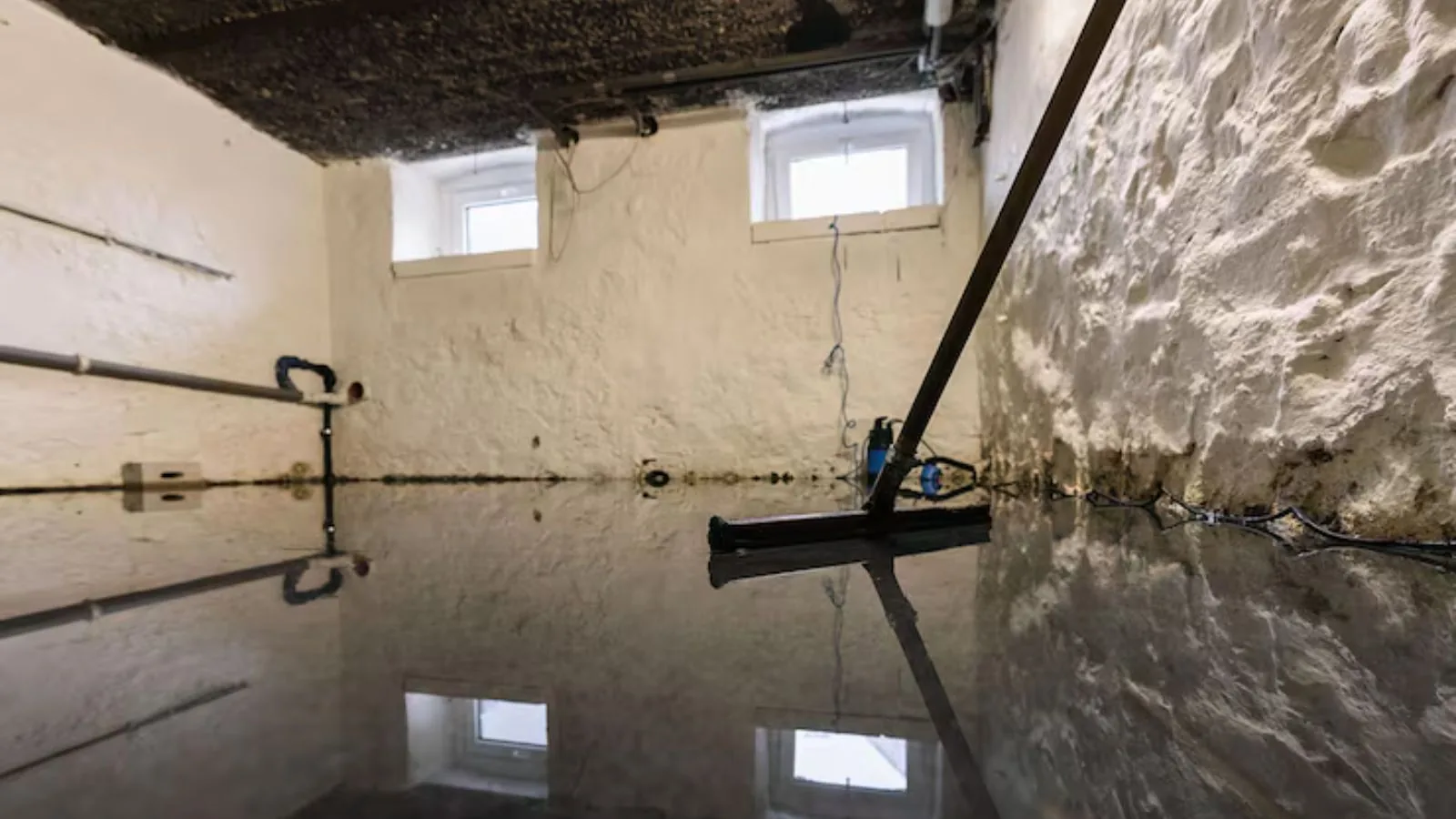
Emergency Flood Damage Cleanup in Manhasset, NY
Rain, groundwater and bay surge bring Category 2 and 3 water into homes. This page covers the safety rules, the cleanup stages and what insurers usually treat as flood.
☎ Call (833) 521-1033Flood damage restoration removes outside water from a building, discards what cannot be cleaned, sanitizes what can and dries the structure. Floodwater from rain, rising groundwater or a coastal surge is treated as contaminated, because it crosses yards, streets and storm drains before it reaches your floor. If water is coming into a Manhasset home now, call (833) 521-1033 and keep people and pets out of it.
Flooding emergency: what to do before help arrives
Stay out of standing floodwater if electricity is on. Do not run household appliances in a flooded room, and leave the panel alone unless you can reach it while dry. Move to a higher floor, take medications and documents, and photograph the water line on walls and furniture before cleanup begins.
Do not enter floodwater with live power
Floodwater can hide energized outlets, extension cords and appliances. If water is at outlet height, call the utility or 911 before anything else. Do not use a shop vacuum in standing flood water.
Flood sources around Manhasset
Manhasset has a long shoreline on Manhasset Bay and a stream and pond system draining toward it. The Town of North Hempstead has worked on stormwater and stream bank projects near Community Drive and Whitney Stream, which shows how much runoff moves through the hamlet. Rain that overwhelms storm drains can pond on streets and enter homes at doors, windows and basement walls.
Coastal surge is the other path. During Hurricane Sandy on October 29, 2012 the National Ocean Service gauge at Kings Point on the western Sound recorded a peak storm tide of 14.31 feet above mean lower low water, a storm surge of 8.54 feet. Sandy also put one to two feet of water into Douglaston Park in Queens, one of the neighborhoods near our Little Neck coverage.
Surge flooding is a reason to check whether your property sits in a mapped flood zone on the FEMA Flood Map Service Center.
| Source | Typical water category | Main concern |
|---|---|---|
| Heavy rain, groundwater | Category 2 to 3 | Seeps through slabs, walls and window wells |
| Bay or Sound surge | Category 3 | Salt and sediment, contaminated by sewage and runoff |
| Overwhelmed storm drains | Category 3 | Water arrives with debris and bacteria |
| Sewer line backup | Category 3 | Raw sewage. See sewage backup cleanup |
How a flood cleanup proceeds
- Safety check for power, structural damage and contamination
- Extraction of standing water with pumps and wet vacuums
- Removal of carpet, pad, soaked drywall and insulation that cannot be cleaned
- Cleaning and sanitizing of framing and surfaces that stay
- Drying with air movers and dehumidifiers until moisture readings match dry reference points
- Documentation for insurance throughout
The order matters. Removing wet porous materials early reduces the moisture load on the drying equipment and limits odor. Subfloors and framing that can be cleaned are dried in place, and the structural drying page explains how readings are tracked.
Flood water inside the house?
Call (833) 521-1033. The line is open 24/7, and scope and price are explained before work starts.
Flood insurance is not the same as homeowners insurance
The New York State Department of Financial Services states that the typical homeowners or renters policy does not cover flood damage. Coverage may come from a water back-up or sewage endorsement or from a separate National Flood Insurance Program policy. Wind damage is more likely to be covered under a standard policy.
The department also tells policyholders to file a claim as soon as possible, to document losses before cleaning up, to protect property from further damage and to avoid permanent repairs until the insurer has inspected. We can provide moisture readings, photos and an itemized scope, but your insurer decides coverage, so ask your insurer what applies to your policy.
Our crews work from Manhasset and also reach Great Neck, Roslyn, Albertson, Roslyn Heights and Little Neck. If the flood started with a basement problem, the basement water damage cleanup page covers the below-grade room.
Questions We Hear
Yes. Storms do not keep business hours, and the phone line is answered 24/7. Call (833) 521-1033, stay out of any water that may be near live power, and describe where the water is coming from.
Treat it that way. Flood water crosses yards, roads and drains and can carry bacteria and chemicals. Porous materials that sat in it are usually removed, and hard surfaces are cleaned and sanitized.
The state insurance department says typical homeowners and renters policies do not cover flood. A water back-up endorsement or a separate flood policy may apply. Read your policy and ask your insurer.
Search your address on the FEMA Flood Map Service Center. A home outside a mapped zone can still flood, so the map is a starting point rather than a promise.
Extraction takes hours. Drying often runs several days depending on materials, humidity and how deep the water reached, and daily readings confirm when it is done.
Flood Damage Cleanup help in Manhasset
The 24/7 line is answered at (833) 521-1033. Scope and price are explained before work starts.
☎ Call (833) 521-1033