
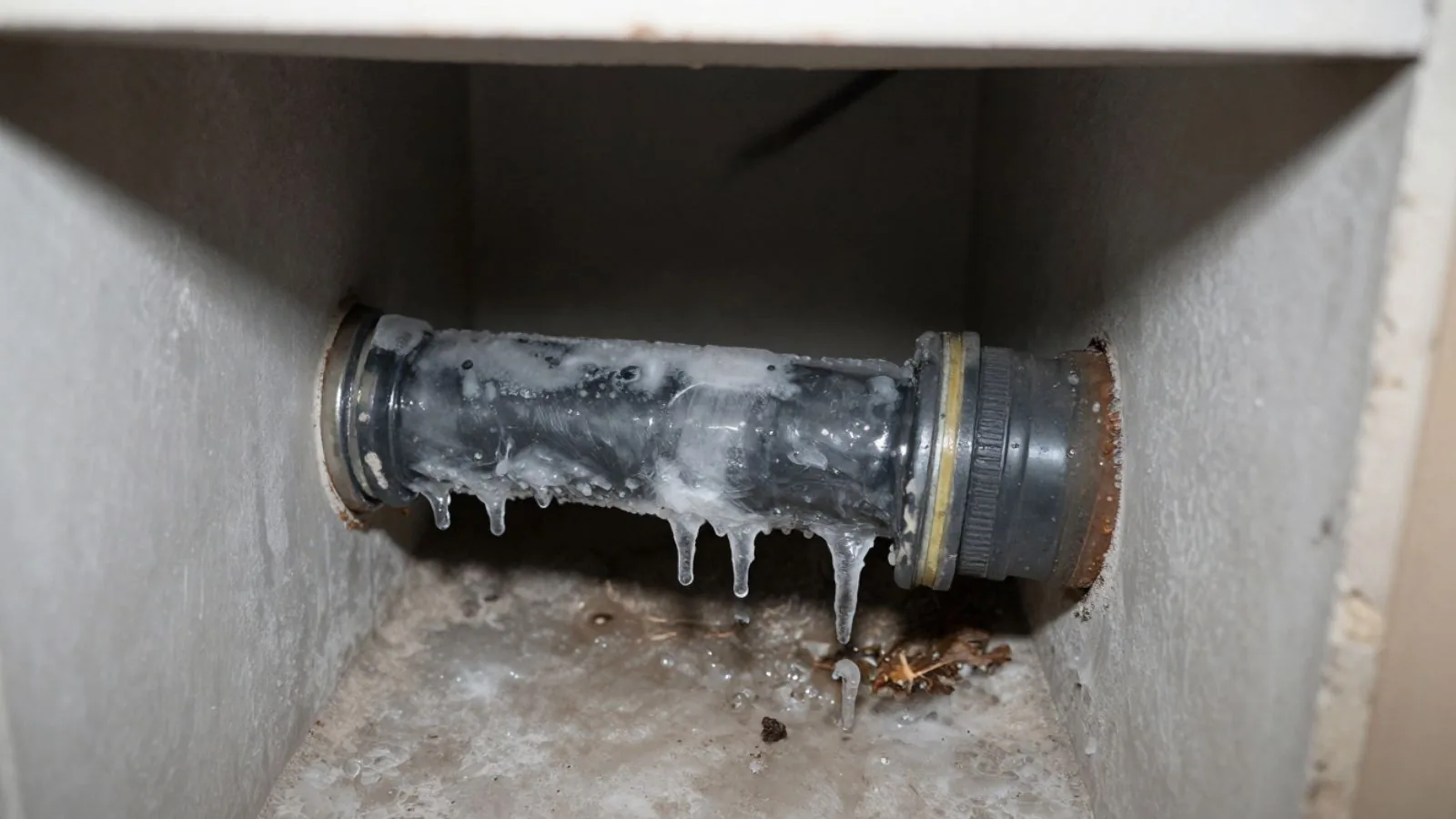
Emergency Frozen Pipe Water Damage in Manhasset, NY
A frozen pipe often looks fine until it thaws. This page explains the thaw flood, what to do when a split line starts running and how we dry the structure.
☎ Call (833) 521-1033Frozen pipe water damage usually shows up after the ice melts, not while the pipe is frozen. Water expands as it freezes, the pipe wall splits or a joint opens, and nothing leaks until the ice turns back to liquid and the pressure returns. If a line in your Manhasset home has thawed and is now running or dripping where it should not, shut off the main valve and call (833) 521-1033.
A thawed pipe is leaking: act now
Do not use a torch or open flame to thaw anything. If a pipe is frozen but not yet leaking, open the faucet it feeds, warm the room and use a hair dryer on low heat moving along the pipe. If water is already escaping, close the main shutoff, drain the lines at the bottom-most tap, and call the 24/7 line while you move belongings away from the wet area.
Ceilings and light fixtures
If water is leaking through a ceiling and a light fixture is wet or humming, leave the fixture off and stay out of the room. Cut power only from a dry position and call the utility or 911 for any sparking or burning smell before you call us.
Where frozen pipes tend to split
- Exterior walls with thin insulation, especially behind kitchen and bath cabinets
- Garages, porches and attached breezeways without heat
- Crawl spaces and basement ceilings near rim joists
- Outdoor spigots and the supply line feeding them
- Pipes in vacant or seasonal rooms where the heat was turned down
We do not claim frozen pipes are common in any particular Manhasset block, because that depends on the house and the winter. The mechanism is simple though. Any supply line that runs through an unheated or poorly insulated space is a candidate, and Long Island homes with additions or finished attics often have lines in exactly those spaces. If you are unsure, ask a plumber to look at the exterior wall runs before the next hard freeze.
How the thaw flood is handled
Frozen pipes tend to fail in hidden places, so the first job is finding the wet zone. Technicians read moisture meters across the walls, ceilings and floors near the affected pipe and use thermal imaging to find cooler wet areas. Extraction removes pooled water, then insulation and any drywall that cannot dry in place are removed.
After that, air movers and dehumidifiers dry the framing. Daily readings track progress, and the room is considered dry only when readings match dry reference points. The structural drying page walks through the equipment, and the ceiling water damage repair page covers stained and sagging ceilings after an upstairs pipe splits.
Pipe thawed and flooding?
Call (833) 521-1033. The phone line is answered 24/7 and the scope and price are explained before work starts.
Frozen pipe versus burst pipe: what differs
| Question | Frozen pipe split | Pressure burst |
|---|---|---|
| When does water appear? | Often after thawing, sometimes hours later | Immediately |
| Where is it usually? | Cold walls, ceilings, unheated spaces | Anywhere along the line |
| First move | Main shutoff, then drain the lines | Main shutoff, then drain the lines |
| Drying focus | Cavities in exterior walls and ceiling joists | Whatever path the water followed |
The cleanup is much the same, which is why the burst pipe water damage page is a good companion read. The difference is mostly location. Exterior walls cool and dry slowly, so frozen pipe jobs often need more patience with wall cavities.
Cost, insurance and who to call
The scope depends on how much water escaped, how long it ran before shutoff, which rooms it crossed and how many days drying takes. We explain scope and price before work starts. Many homeowners policies cover sudden and accidental pipe failures, including some freeze damage, but terms differ, so read your policy or ask your insurer, and photograph everything before you clean up.
Pipe replacement is plumbing work. Hire a plumber for the split section and keep the invoice with your claim file. We serve Manhasset, Roslyn, Great Neck, Albertson, Roslyn Heights and Little Neck for the water cleanup and drying around it.
According to the New York State Department of Financial Services, document damage before cleanup and avoid permanent repairs until the insurer has inspected. Industry practice for drying and cleanup follows the ANSI/IICRC S500 reference for water damage restoration, and you can ask any company whether its crews work to it.
Questions We Hear
Yes. Freeze damage often appears at night or on a weekend morning when the thaw starts, and the phone line is answered 24/7. Shut off the main valve and call (833) 521-1033.
Not yet. Open the connected faucet, warm the area and thaw the pipe gently from the faucet side backward. If you see bulging, cracks or water, treat it as a leak and shut off the main.
Ice can hold a split pipe closed. When it melts, supply pressure pushes water through the crack, so the leak starts at the thaw rather than the freeze.
Coverage varies. Many policies cover sudden freeze damage but may have conditions about heat in the home. Read your policy or ask your insurer, and keep photos, receipts and the plumber invoice.
Often only the wet section. Moisture readings show where, and cavities that read wet usually need access for drying or removal of wet insulation.
Frozen Pipe Water Damage help in Manhasset
The 24/7 line is answered at (833) 521-1033. Scope and price are explained before work starts.
☎ Call (833) 521-1033