
How Long Does Water Damage Take to Dry? A Manhasset Guide
There is no fixed number of days. Drying finishes when readings say so. Here is what speeds it up and what slows it down.
☎ Call (833) 521-1033People ask how long drying takes as if it were baking a cake. The honest answer is that it depends on what got wet, how wet and how conditions are controlled. Many jobs take several days. Some take longer. A crew finishes drying when moisture readings in the materials match a dry reference, not when the calendar says so.
This guide explains the factors, the method and how to tell when it is done. It reflects the ANSI/IICRC S500 reference standard for water damage restoration.
What drives drying time
| Factor | Faster | Slower |
|---|---|---|
| Water category | Clean water | Contaminated water that needs removal first |
| Time before action | Hours | Days |
| Materials | Tile, sealed concrete | Wood, plaster, dense insulation, pad |
| Area wet | One room | Several rooms and floors |
| Humidity outside | Dry weather | Humid summer days |
| Access | Open walls and floors | Closed cavities |
Dense materials such as hardwood and concrete hold water and release it slowly. Thin drywall releases it quickly. Wet insulation traps water against studs and often has to be removed. Our hardwood floor water damage repair page explains why wood is slow.
The drying process
- Stop the source of water
- Extract standing water
- Remove materials that cannot be dried
- Set air movers to push air across wet surfaces
- Run dehumidifiers to pull moisture out of the air
- Check readings daily and adjust equipment
- Remove equipment when readings reach the dry goal
Dehumidification is the key. Air movers evaporate water from surfaces, and the dehumidifiers remove it from the air. If you run only fans, moisture can condense elsewhere. See structural drying for equipment and readings.
How readings work
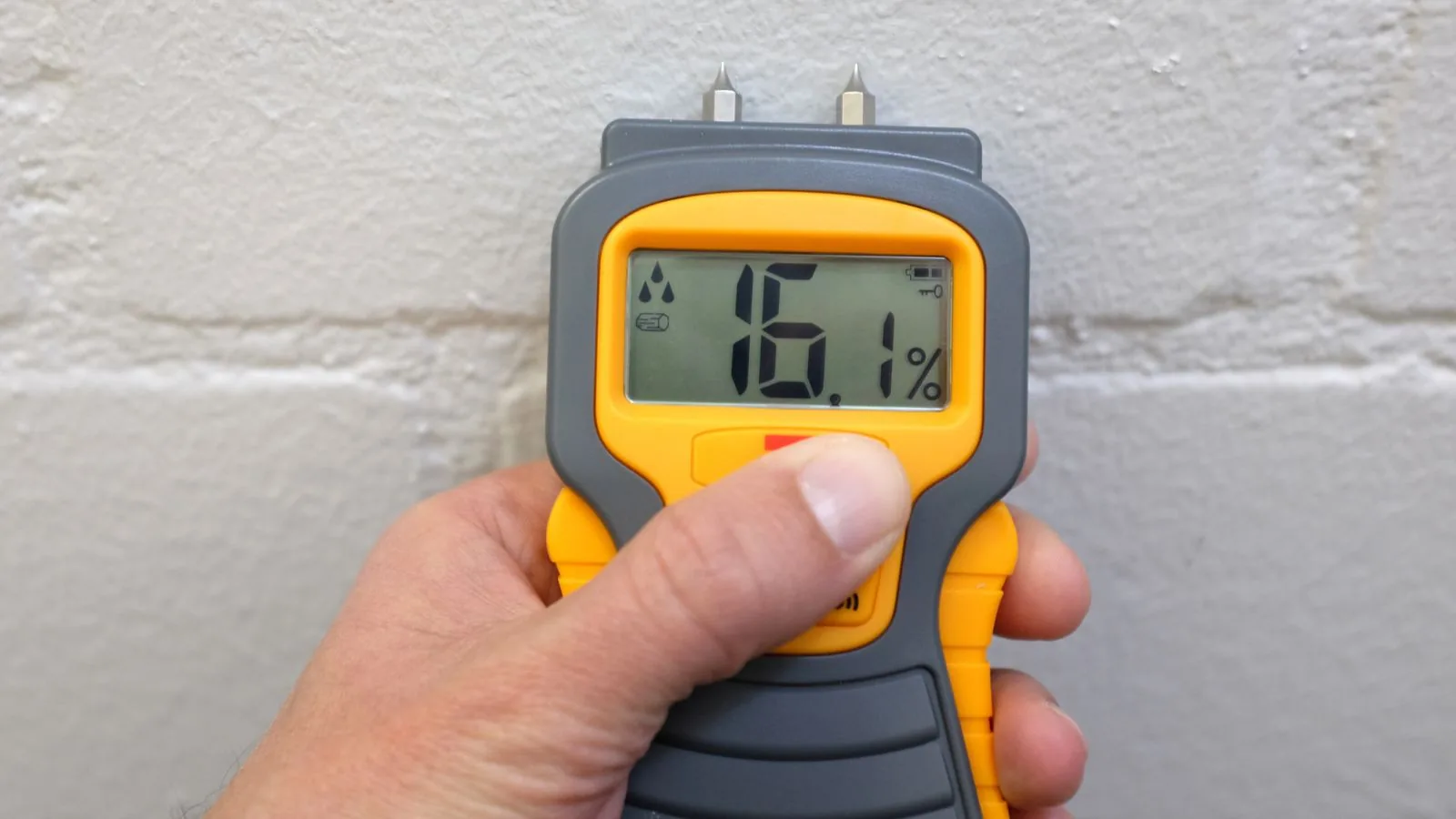
Moisture meters measure the moisture content of materials. A crew takes a reading in unaffected material as a reference, then compares the wet areas to it. Thermal cameras show temperature differences that point to wet areas. Readings are recorded daily and the log forms part of the job file.
Drying is not complete when the surface feels dry. Materials can feel dry while the interior is wet. A reading proves it.
Typical timelines, with caution
Many structural drying jobs involve a few days of equipment, and larger or more complex ones take longer. Some materials may need follow-up. We avoid giving a firm number because every job differs, and a number promised before readings can mislead. We explain the expected drying days once we see the job.
- Small clean-water loss in drywall and carpet: a few days of equipment is common
- Hardwood floors: often longer, with slow, controlled drying
- Concrete slabs and basements: longer because concrete holds moisture
- Wall cavities with insulation: depends on removal and access
Why dehumidifiers matter more than fans
Fans move air across wet surfaces and help water leave the material, but the water goes into the room air. Without a dehumidifier, that moisture ends up on other surfaces. Low-grain refrigerant dehumidifiers pull it from the air and drain it away, which keeps drying moving. A job with plenty of fans and no dehumidifiers often stalls.
The weather matters too. In humid summer weather, outdoor air is wetter than indoor air, so open windows can slow drying. In cold, dry winter weather, indoor heat helps. Crews adjust equipment to the conditions each day rather than following a fixed plan.
What happens at the end of a job
When readings match the dry goal, the equipment comes out and the crew records the final numbers. Any removed materials are replaced in the repair stage. If a reading rises again after equipment leaves, call right away, because it may indicate a hidden source. Ask for a copy of the log for your records and your insurer.
Questions to ask your crew
- How many drying days do you expect, and what could change that?
- Where are the readings taken, and can I see them?
- What is the dry goal for each material?
- What do I do if I notice a new stain or smell?
- When will the equipment be checked?
Good answers are specific. If a crew cannot say what its readings are or what the goal is, ask again.
What to do while drying runs
- Do not turn equipment off or move it
- Keep doors and windows closed unless the crew says otherwise
- Report new stains or smells right away
- Keep children and pets away from cords
Manhasset notes
Humid summers on the North Shore slow drying indoors unless dehumidifiers run properly. Opening windows can help in dry weather and hurt in a muggy one.
Basements near Manhasset Bay and the Whitney Stream can carry higher background humidity. Our Great Neck and Roslyn Heights pages describe nearby places with different terrain, which can affect how fast a basement dries.
What you can do
- Keep the equipment running and do not turn it off
- Keep doors and windows closed unless told otherwise
- Do not move equipment
- Keep children and pets away from cords
- Report new stains or smells right away
Equipment is loud and warm, and that is normal. Your electric bill will rise a little. Ask the crew about how many days to expect and what the readings show.
Local Questions
It depends on the water, the materials and the humidity. Concrete takes longer, and readings decide the end.
The interior of materials may still be wet. Readings tell when drying is done.
Only in dry weather. In humid weather it can slow drying.
Moisture can remain in materials and lead to odor and mold.