
Storm Season Home Prep for Manhasset, NY Homeowners
Storms on the North Shore range from tropical systems to summer cloudbursts. A short checklist before the season keeps small problems small.
☎ Call (833) 521-1033The North Shore of Long Island gets weather from several directions. Tropical storms and hurricanes come up the coast, nor'easters arrive in winter, and stalled summer fronts dump rain in a few hours. Preparation is mostly about water paths: where it enters, where it flows and where it can be stopped.
This guide offers a checklist for a Manhasset home, based on local weather history and general guidance from the National Weather Service and FEMA.
What local storms have done
During Hurricane Sandy on October 29, 2012, the NOAA gauge at Kings Point recorded a peak storm tide of 14.31 feet above mean lower low water, a surge of 8.54 feet. The National Weather Service recorded a 77 mph gust at Bayville and 82 mph at Syosset. Trees fell, roofs lost shingles and basements took water.
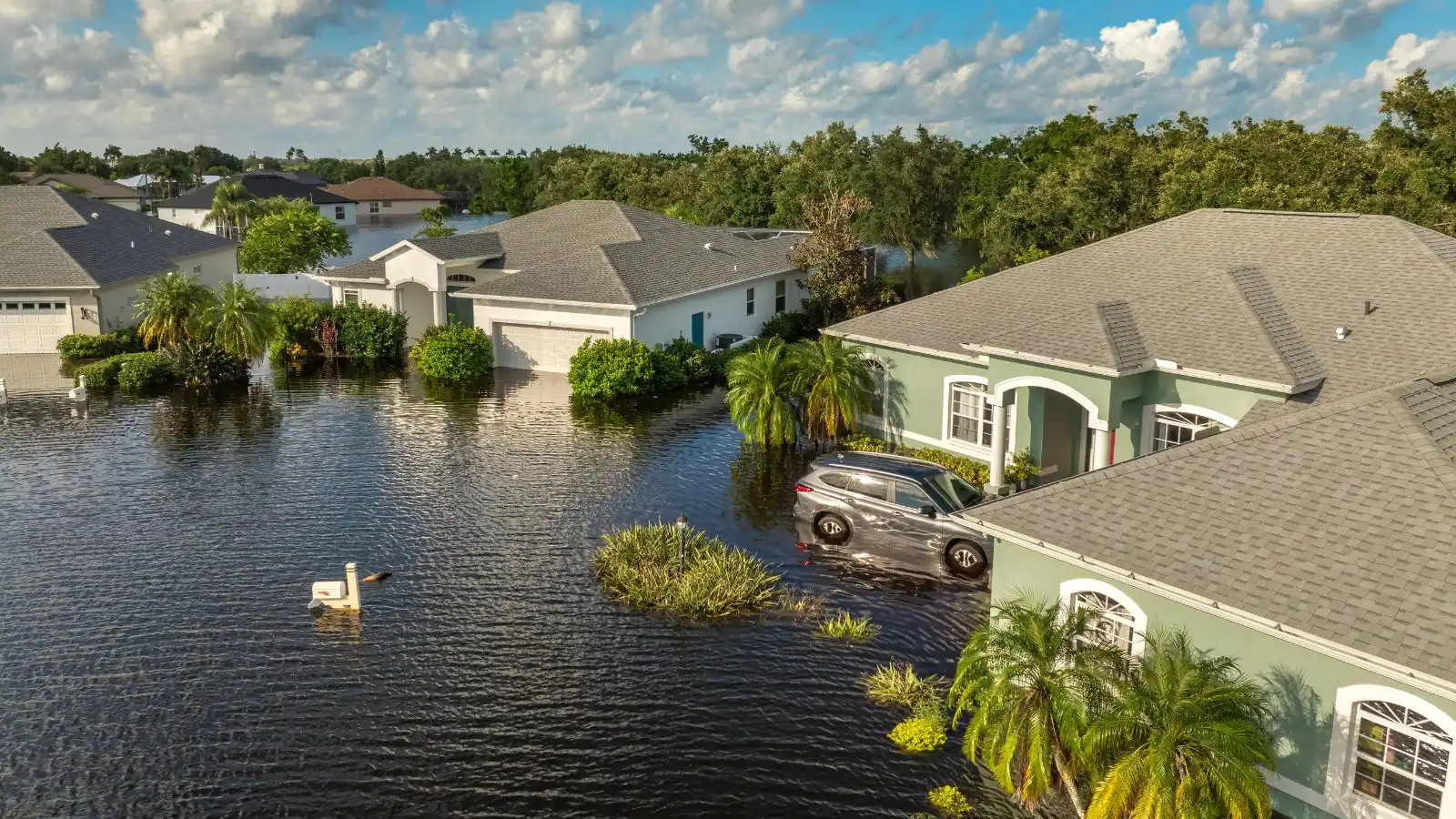
On July 31, 2025, flash flooding brought 3.35 inches of rain to Great Neck, 1.60 inches to Albertson and 1.01 inches to Port Washington, per the Weather Service. A street in Russell Gardens flooded onto the Great Neck LIRR platform. The same storm can deliver very different totals a few miles apart.
Outside the house
- Clean gutters and downspouts, and direct water several feet from the foundation
- Check roof flashing, shingles and chimney caps
- Trim tree limbs that overhang the roof
- Secure outdoor furniture and bins
- Check the grade so that water slopes away from the foundation
- Clear leaves from storm drains on your street if safe to do so
Gutters are the simplest protection for the foundation. A clogged gutter spills at the wall and the water finds its way into a basement. A downspout that empties at the foundation does the same.
Inside the house
- Test the sump pump by pouring water into the pit
- Consider a battery backup for the sump pump
- Know where the main water shutoff is and that it turns
- Move valuables off the basement floor
- Check the water heater and the washer hoses
- Photograph your belongings for insurance
A sump pump is only useful if it runs when the power is out. Storms often cut power, and many sump failures happen in exactly that window. Our basement water damage cleanup page explains what happens when the pit overflows.
| Hazard | Preparation | If it happens |
|---|---|---|
| Wind-driven rain | Check roof and window seals | Storm water damage cleanup |
| Surface flooding | Know your flood zone | Flood damage restoration |
| Power outage | Backup for sump pump | Call a plumber and a restoration crew |
| Downed lines | Stay clear | Call PSEG Long Island or 911 |
Insurance before the storm
Read your policy before the season. DFS notes that typical homeowners policies do not cover flood, and that a separate flood policy or NFIP coverage may apply. NFIP policies usually carry a waiting period before they take effect, so the time to buy is not during a storm warning.
If the power goes out
Storms often take out electricity, and that can stop a sump pump when it is needed most. A battery backup pump or a water-powered backup gives some protection. Test whichever you have, and keep a flashlight and a charged phone near the basement stairs.
Do not enter a basement with standing water if the power is on or you are not sure. Water and electricity together are dangerous, and the house panel may be below the waterline. Call PSEG Long Island if lines are down, and call 911 for any immediate danger.
After the storm passes
- Walk the outside first and note downed limbs or wires
- Look for roof damage from the ground, not the roof
- Check ceilings and the attic for stains
- Check the basement and garage
- Photograph everything before cleanup
- Call for help if water entered
Our flood damage restoration page explains what to expect if floodwater reached the house.
Storm kit for the house
- Flashlights and extra batteries
- A battery pack to charge phones
- Plastic sheeting and tape for temporary protection from the inside
- Towels and a wet-dry vacuum for small spills
- A basic tool kit and a wrench for shutoff valves
- Copies of your insurance policy and contact numbers
Keep the kit in one place, such as a closet on the main floor. Tell everyone in the household where it is.
According to the National Weather Service, flash flooding can happen within hours of heavy rain, so know your local risk before a storm.
Industry practice for drying and cleanup follows the ANSI/IICRC S500 reference for water damage restoration, and you can ask any company whether its crews work to it.
Manhasset notes
Manhasset has low ground by the Whitney Stream and the shoreline, and higher ground toward the north and east. The FEMA Flood Map Service Center shows mapped hazard areas by address. Look yours up.
PSEG Long Island supplies electricity here and National Grid supplies gas. If you smell gas after a storm, leave and call National Grid or 911. Our Great Neck and Roslyn pages describe nearby towns with similar risks.
A one-page checklist
- Gutters and downspouts clear
- Sump pump tested, backup considered
- Main water valve located
- Photos of belongings saved
- Policy read, flood coverage confirmed
- Emergency numbers saved on your phone
Save our line, (833) 521-1033, with your other emergency numbers. It is answered 24/7.
Local Questions
Hurricane season runs June through November, and summer thunderstorms and winter nor'easters bring other risks. Prepare for all of them.
Check the FEMA Flood Map Service Center with your address. A neighborhood name does not tell you.
Ask your agent. A waiting period usually applies, so the decision belongs before storm season.
Move to safety, stay clear of electrical hazards, photograph the damage and call when it is safe.